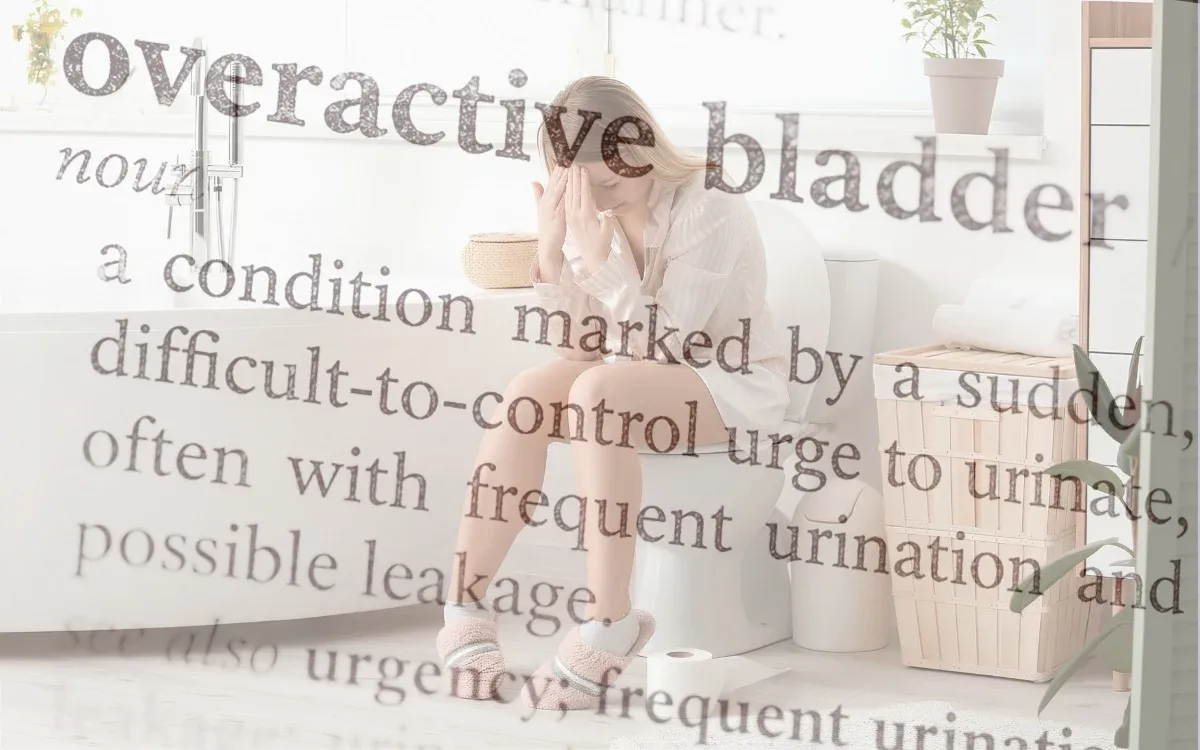
Overactive bladder symptoms affect roughly one in three women at some point, and that number probably surprises you (because almost nobody talks about it). The sudden urge that stops you mid-sentence, the nighttime trips that break your sleep, leaking before you even reach the door: those aren’t quirks to schedule your life around. They’re recognized symptoms, and there are treatments that actually work.
Jump to Section
- What Is an Overactive Bladder, Exactly?
- What Does an Overactive Bladder Actually Feel Like?
- What Causes Overactive Bladder Symptoms?
- Is an Overactive Bladder the Same as a UTI?
- What Actually Helps Overactive Bladder Symptoms?
- No Embarrassing Questions, Just Real Answers
- Bladder Questions Women in Little Rock Ask Us
- You Don’t Have to Manage This Alone
What Is an Overactive Bladder, Exactly?
Overactive bladder (OAB) isn’t a disease with a single identifiable cause. It’s a syndrome, meaning it’s defined by what you’re experiencing rather than anything that shows up on a lab result or scan. The core symptom is urgency: a sudden, strong need to urinate that feels hard to put off. That urgency typically brings frequent trips to the bathroom with it, and sometimes leaking before you get there.
You’re not alone in this. According to the Cleveland Clinic, OAB affects up to 33 million adults in the United States, approximately 40% of women at some point in their lives. And the numbers are rising. Research published in the International Urogynecology Journal (Xie et al., 2026) found that OAB affected 22.1% of U.S. women in 2017-2020, up from 18.7% in 2005-2006.
If you’ve been telling yourself this is just what happens as you get older, or that it’s not really worth bringing up at an appointment, you’re far from alone in that thinking. A lot of women sit with OAB symptoms for years before mentioning them to anyone. There’s often embarrassment woven into it, or a quiet assumption that nothing can really be done. But that assumption isn’t accurate, and your provider would rather hear about it sooner.
At The Woman’s Clinic near Baptist Health in Little Rock, our providers see this every week. And it’s nearly always treatable.
What Does an Overactive Bladder Actually Feel Like?
The defining feature of OAB is urgency. It’s a sudden, intense need to urinate that arrives without much warning. Your bladder isn’t necessarily full. But the signal fires anyway, and it’s hard to ignore. You may find yourself dropping what you’re doing mid-conversation, mid-meeting, mid-sentence, because the urge won’t wait.
Frequency comes with it. Most people use the bathroom six to eight times in a day without giving it much thought. Women with OAB often go more than that, and after a while, the pattern starts shaping everything: which errands to run, where to sit, whether to leave the house at all. The bathroom doesn’t feel like a pit stop anymore. It feels like it’s running the schedule.
Then there’s what happens at night. If you’re waking up to use the bathroom more than once a night, that lost sleep compounds quickly. You feel it the next day, and the day after. Nocturia is one of the symptoms women mention least, partly because it can seem easy to explain away as aging or stress. But interrupted sleep is a real consequence, and it’s worth taking seriously.
Urge incontinence is one of the most common overactive bladder symptoms, and one of the least talked about. It’s when the urge arrives so fast and so forcefully that you leak before reaching the bathroom. Worth noting: not every woman with OAB experiences this. Some have urgency and frequency without any leaking at all, which is sometimes called dry OAB. Incontinence is a possibility, not a guarantee.
One distinction worth knowing before your appointment: OAB and stress incontinence are not the same condition. With OAB, the urge comes first and the leaking (if it happens) follows that urgency. Stress incontinence is different. It’s pressure-driven: leaking when you cough, sneeze, laugh, or lift something heavy, often without any preceding sense of urgency. The two conditions have different mechanisms, and they respond to different treatments.
What Causes Overactive Bladder Symptoms?
At the root of OAB is a misfiring signal between the bladder and the brain. The bladder wall contracts before it’s actually full, triggering an urgent sensation even when there’s still capacity. The urge feels real because it is real. The signal just arrives too early.
Estrogen does a lot of quiet work in your pelvic region, and you feel it when levels start to drop. During perimenopause and menopause, that decline causes the tissues around your urethra and bladder to thin out, and your pelvic floor muscles gradually lose some of the tone they once had. Less support means the bladder has a harder time holding on. That’s a big part of why OAB shows up so much more often in women over 45.
Pregnancy and childbirth stretch and strain the pelvic floor in ways that can affect bladder control for years afterward. Body weight matters too. Extra weight places consistent pressure on the bladder, which can amplify urgency signals over time.
A lot of women are surprised to find out how much diet plays into this. Caffeine is one of the biggest culprits, but alcohol, carbonated drinks, and spicy foods can all provoke the bladder just as effectively. Pulling back on even one of those (just coffee, say) is sometimes enough to feel a real difference before trying anything else.
Pelvic conditions can contribute as well. Ovarian cysts can also create bladder pressure, which sometimes gets mistaken for a bladder problem on its own.
For many women, no clear cause is ever found. The bladder can become overactive gradually, with no injury, infection, or single moment you could point to as the start. That does not mean something is broken. It just means your body got here through a quieter route, and treatment can still work.
One question almost every woman asks first: is this a urinary tract infection?
Is an Overactive Bladder the Same as a UTI?
Many women come in convinced they have a UTI, and honestly, that makes complete sense. The symptoms can feel nearly identical: that sudden urge you can’t ignore, the constant trips to the bathroom. But an overactive bladder and a UTI are two different conditions, and the treatment for one won’t help the other.
A urinary tract infection is caused by bacteria. Along with urgency and frequency, a UTI typically brings a burning or stinging sensation during urination, sometimes cloudy or blood-tinged urine, and occasionally a low-grade fever. That burning is the telltale sign.
Overactive bladder has nothing to do with bacteria. The urgency and frequency come from a nerve and muscle problem: the bladder contracts too early, sending signals that feel desperate even when the bladder is barely full. That’s why there’s no burning sensation, and no infection to treat. It’s a communication breakdown between the nerves and the bladder wall, not something you “caught.”
This distinction matters because treating OAB with UTI remedies (cranberry supplements, AZO, or antibiotics) will not help. It delays the evaluation you actually need.
Both conditions can exist at the same time. When UTIs happen repeatedly, the ongoing irritation can affect the bladder nerves, and over time that nerve involvement may contribute to OAB developing or getting worse.
If frequent infections have been part of your experience, it helps to know five things to avoid when you have a UTI. It’s also worth bringing up with your provider whether nerve irritation could be playing a role in what you’re feeling now.
Once you know what you’re dealing with, there are good options.
To learn more about UTI’s, download our Dos and Don’ts of a Urinary Tract Infection Infographic
What Actually Helps Overactive Bladder Symptoms?
Most women are surprised by how many options exist. Bladder retraining is usually the first recommendation, and the concept is simpler than it sounds: you schedule bathroom trips at set intervals, then slowly stretch those intervals over time, training your bladder to hold more before the urge hits. It asks for a few weeks of patience, but for many women, that consistency pays off.
Pelvic floor exercises are another cornerstone. Kegel exercises strengthen the muscles responsible for suppressing urgency signals, but doing them correctly matters. Many women benefit from working with a pelvic floor physical therapist rather than guessing at the technique on their own.
For some women, lifestyle changes get you part of the way there but not all the way. When that happens, medication is a reasonable next step. Two classes work well here: anticholinergics and beta-3 agonists, both of which calm an overactive bladder muscle. Side effects exist, but most women tolerate these medications well, and your provider can work with you to find the one that fits your body and your life.
Botox has a less glamorous job here: injected directly into the bladder muscle, it quiets the overactive contractions that make urgency feel uncontrollable. The results aren’t permanent, but for many women the relief lasts several months before a repeat treatment is needed.
When Botox isn’t the right fit, neuromodulation is worth a conversation. Sacral nerve stimulation works through a small implantable device that gently regulates nerve signals to the bladder. Tibial nerve stimulation takes a different approach entirely: it’s done right in the office, no surgery, no downtime. Either one may be on the table if earlier treatments left you still searching for real relief.
The 2024 AUA/SUFU clinical practice guideline for OAB shifted away from requiring patients to move through a rigid step-by-step escalation. The emphasis now is on personalized treatment, which is exactly the approach the bladder health specialists at The Woman’s Clinic take with every patient. What fits your symptoms, your schedule, and your preferences matters as much as what the research supports.
Treatment for OAB works. The path looks different for everyone, but most women find meaningful relief.
No Embarrassing Questions, Just Real Answers
These are the questions women carry quietly for months or years before finally saying them out loud. You deserve straight answers.
Will my overactive bladder get worse as I get older?
It depends on a lot of factors, and “inevitable decline” is not the right frame. Hormonal changes during perimenopause and menopause do affect bladder control for some women, but that shift is not universal and it is not something you just have to accept. Catching symptoms early gives you more treatment paths to work with, and those options exist at every stage of life.
Is it normal to leak a little, or do I need to see someone?
Leaking is extremely common, particularly among women who have been pregnant or given birth. “Common” is not the same as something you simply have to accept. If leakage affects how you dress, what activities you choose, or how you feel leaving the house, that is reason enough to have a conversation with a provider.
Can sex affect overactive bladder symptoms?
Some women notice urgency or discomfort during or after intercourse, and it can quietly create anxiety around intimacy over time. This is documented and real, and it is not a topic you need to tiptoe around at your appointment. A gynecologist can evaluate and treat overactive bladder as part of a complete picture of your pelvic health, including how symptoms are affecting your relationships and daily life.
I’m only in my 30s. Is this really something that happens to younger women?
Yes, and more often than most women realize. Pregnancy, childbirth, and even prolonged periods of high stress can all alter pelvic floor function well before midlife hits. If you are noticing urgency or frequency that feels new or disruptive, that is worth bringing up at your next visit. Your age does not make it less real or less treatable.
Is overactive bladder the same thing as incontinence?
They overlap but are not the same thing. Overactive bladder refers to the pattern of urgency and frequent urination, which can happen with or without leaking. When leaking does occur alongside that urgency, it is called urge incontinence. Many women with overactive bladder never leak at all. Both patterns are worth discussing with a provider.
Does drinking less water help with overactive bladder symptoms?
This is one of the most common instincts women have, and it tends to backfire. Reducing fluid intake makes urine more concentrated, which actually irritates the bladder lining and can intensify urgency signals. Staying reasonably hydrated is part of managing symptoms well. Your provider can help you find the right balance for your body.
Will I need surgery?
The large majority of women with overactive bladder never need surgery. Behavioral strategies, pelvic floor physical therapy, bladder training, and medications resolve symptoms for most women and are typically the first path explored. Surgery is reserved for cases that do not respond to other approaches, and it represents a small fraction of overall treatment.
Bladder Questions Women in Little Rock Ask Us
| Question | Short Answer | When to Talk to Your Provider |
|---|---|---|
| How often is normal urination? | 6 to 8 times per day for most adults | If you are going more than 8 times daily or waking 2 or more times per night |
| What is the difference between OAB and stress incontinence? | OAB is urgency-driven; stress incontinence happens with physical pressure such as coughing, sneezing, or laughing | Either type of leaking is worth discussing with a provider; both are treatable |
| Can caffeine really trigger symptoms? | Yes, caffeine is a bladder irritant that amplifies urgency signals | If cutting caffeine for 4 to 6 weeks does not improve things |
| Is there a test for overactive bladder? | Diagnosis is typically symptom-based; a provider may use a voiding diary or simple urinalysis | At first signs; early evaluation means more options available to you |
| Can OAB go away on its own? | Sometimes with lifestyle changes; often it benefits from some additional support | If symptoms persist more than a few weeks or begin to affect your daily life |
You Don’t Have to Manage This Alone. We’re Right Here in Little Rock.
Overactive bladder symptoms are common, they are well understood, and there is nothing to be embarrassed about. Women have been navigating this privately for far too long when real, effective care is available.
Ninety years of caring for women in Little Rock means bladder health has always had a place at this practice, long before it became a topic people felt comfortable raising with their doctors. That history is still here, and so are we.
You will find us in Baptist Medical Towers, right on the Baptist Health campus next to Baptist Health Medical Center. If you are coming from elsewhere on campus, there is a complimentary shuttle service that will bring you straight to our building.
Women searching for help with overactive bladder symptoms near me in Little Rock find us every day: some relieved, some a little nervous, most just ready to talk to someone who will listen. Whatever you are feeling walking in, our team meets you there, without judgment, at every stage of life.
Schedule an appointment when you are ready. There is no pressure and no rush. We are here when you are.
The Woman’s Clinic, P.A.
9601 Baptist Health Drive, Suite 1200
Little Rock, AR 72205
