
Subtle, persistent changes in the body can be easy to overlook—especially when they resemble everyday digestive or urinary issues. Yet recognizing the early symptoms of ovarian cancer and seeking timely evaluation improves the chance of finding the disease at a more treatable stage. Do you know what those early signs often look like, why they’re frequently missed, how they differ from common conditions, and which tests clinicians may use to investigate?
Key Takeaways: What Every Woman Should Know
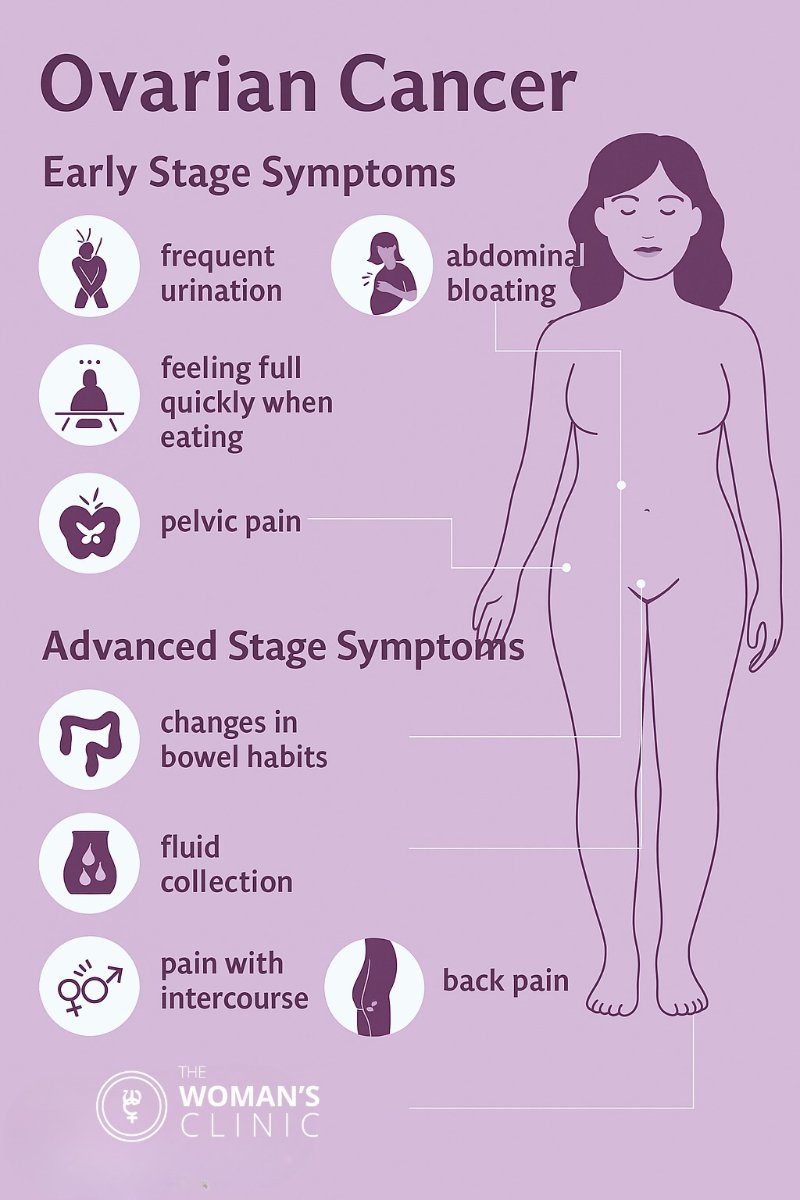
- Core warning signs include: persistent bloating, pelvic or lower abdominal pain/pressure, feeling full quickly, and urinary urgency or frequency.
- Other symptoms may appear: fatigue, unintended weight loss, constipation, digestive discomfort, back or hip pain, and mood or skin changes.
- Patterns matter most: symptoms that occur 12 or more times per month or last longer than two weeks warrant medical attention.
- Easily mistaken for common conditions: ovarian cancer symptoms often mimic IBS, UTIs, or menopause—but unlike those conditions, they typically do not improve with usual treatments.
- Diagnosis relies on multiple tools: pelvic exam, CA-125 blood test (with limitations), ultrasound, and CT/MRI imaging. No single test rules cancer in or out.
- Risk factors include: BRCA1/BRCA2 mutations, family history of breast or ovarian cancer, and women nearing or after menopause.
- Early detection improves outcomes: keeping a symptom log and sharing persistent changes with a gynecologist can shorten the path to diagnosis.
Why Are Early Signs Easy To Miss
Early ovarian cancer seldom announces itself with one dramatic symptom. Instead, it tends to produce several low-grade issues that persist or recur: bloating that doesn’t settle, pelvic pressure, a sense of fullness after small meals, or urinary urgency without infection. These patterns can be mistaken for indigestion, aging, stress, or a busy week—but they matter when they repeat and don’t respond to typical remedies. Health agencies emphasize frequency and duration: symptoms that occur roughly 12 or more times in a month or last longer than two weeks should prompt medical attention.
Researchers who studied symptom timelines found that many patients reported months of recurring issues before diagnosis—another reason to treat persistent patterns with seriousness rather than self-blame.seriously
The Most Common Early Symptoms of Ovarian Cancer
Clinicians and cancer centers consistently highlight a core group of early signs: persistent abdominal bloating or swelling, pelvic or lower abdominal pain/pressure, feeling full quickly (early satiety) or difficulty finishing usual portions, and urinary urgency or frequency. These symptoms can occur in other conditions; in ovarian cancer, they tend to be new for the individual, frequent, and persistent, and they often fail to improve with routine self-care.
Quick reference chart: when common symptoms should raise concern
| Symptom | How it commonly feels | Why it matters in ovarian cancer | When to seek care |
|---|---|---|---|
| Bloating / abdominal swelling | A tight, distended feeling; waistbands fit differently day after day | Tumor growth or fluid (ascites) can expand the abdomen; bloating that persists despite diet changes is concerning | If present on most days for >2 weeks or ≥12 times/month nhs.uk |
| Pelvic or lower abdominal pain/pressure | Dull ache, cramping, lower back or hip discomfort; sometimes worse with sitting or sex | Mass effect or inflammation can irritate pelvic structures and nerves | If new for the person, recurring, or progressively worse MD Anderson Cancer Center |
| Early satiety / reduced appetite | Feeling full after a few bites; declining portion sizes | Space-occupying lesions can press on stomach or intestines | If frequent over weeks and not explained by illness or stress American Cancer Society |
| Urinary urgency / frequency | Needing to urinate often or urgently, with “pressure” but negative urine tests | Pelvic masses can press on the bladder; urinary symptoms that don’t respond to standard UTI treatment warrant evaluation | If ongoing or recurrent without infection American Cancer Society |
| Changes in bowel habits | New constipation, gas, or a “different” digestive rhythm | Mechanical pressure and slowed motility can alter regularity | If persistent despite fiber, fluids, and routine measures Mayo Clinic |
| Unintended weight change and fatigue | Weight loss without dieting; unusual tiredness | Systemic effects and appetite change can appear early | If unexplained and accompanied by other symptoms Mayo Clinic |
The hallmark is not intensity but pattern: new, frequent, and persistent.
How these early symptoms of ovarian cancer differ from IBS, UTIs, or menopause
- IBS and functional GI disorders often come and go with stress, diet, or medication; they usually show partial relief with targeted changes (e.g., low-FODMAP diet, antispasmodics). By contrast, cancer-related bloating or early satiety tends to persist despite typical adjustments.
- UTIs generally produce positive urine tests and improve with antibiotics. Ovarian-related urinary urgency or frequency may continue despite negative tests and lack of response to treatment.
- Perimenopause or menopause can bring hot flashes, cycle changes, and mood shifts, but new, sustained abdominal bloating, early fullness, or pelvic pressure are not typical age-related changes and should be evaluated when persistent.
When Persistence Should Prompt a Call with Your Provider: Early Symptoms of Ovarian Cancer
A practical threshold—used by national health services and symptom-index research—is “roughly 12 or more times in a month” for core symptoms such as bloating, pelvic pain, early satiety, or urinary urgency, especially if the pattern is new and has been present for less than a year (long-standing issues may have other causes but still deserve care). Many clinicians also recommend evaluation for any new symptom that lasts beyond two weeks or progressively worsens. Bringing a brief symptom log to the visit can shorten the time to answers.
Worried about ovarian cancer symptoms? Talk to our OB/GYN team.
If you are noticing persistent bloating, pelvic pressure, or changes in appetite, our gynecologists can evaluate your symptoms and guide next steps.
What to Expect at the Doctor’s Office
There is no single “perfect” test that rules ovarian cancer in or out at an early stage. Instead, clinicians use a combination of history, examination, blood tests, and imaging to clarify risk and decide next steps:
- Pelvic exam to assess for masses or tenderness; small tumors can be hard to feel, so a normal exam does not exclude disease.
- CA-125 blood test, a tumor-associated marker that may be elevated in ovarian cancer but also in many benign conditions (e.g., menstruation, fibroids, endometriosis) and is less sensitive in early-stage disease. Results are interpreted with clinical context and imaging—not used alone.
- Transvaginal or pelvic ultrasound to visualize the ovaries and detect cysts or masses; helpful for triage but cannot always distinguish benign from malignant. CT or MRI may follow if imaging is unclear or suspicion remains.
- Referral to gynecologic oncology when findings warrant specialist input for diagnosis and management.
It’s equally important to recognize what is not recommended for people at average risk without symptoms: major medical bodies (USPSTF, ACOG, NCI) advise against routine screening with CA-125 or transvaginal ultrasound because it has not shown a mortality benefit and can lead to false positives and unnecessary surgery. Testing is appropriate to evaluate symptoms, but not to screen those without them.
Who faces higher risk—and should be especially vigilant
- Family history or inherited mutations: BRCA1/BRCA2 and certain other hereditary syndromes increase lifetime risk. Individuals with strong family histories should discuss genetic counseling and personalized surveillance with their clinicians. Mayo Clinic
- Age: Risk rises with age, especially after menopause, though ovarian cancer can occur in younger adults, including germ-cell tumor types. Persistent, unusual symptoms merit evaluation at any age. Mayo Clinic
- Personal gynecologic history and other factors may influence risk and should be reviewed with a provider as part of an individualized plan. (Patient-friendly overviews are available in national guidelines and cancer society resources.) NCCN+1
A Closer Look at Digestive and Urinary Clues
- Bloating and early satiety: When abdominal fullness appears most days, affects clothing fit, or limits usual portions, it deserves attention—especially paired with pelvic pressure or urinary change.
- Constipation or new bowel pattern: Slow transit, gas, or a sensation of incomplete emptying that doesn’t improve with fiber, fluids, or routine measures can reflect pelvic crowding and warrants evaluation.
- Urinary urgency/frequency without infection: Negative urine tests plus continued symptoms suggest a cause outside the bladder itself; in the setting of other signs, pelvic imaging may be appropriate.
How Research Informs Practical Decisions
Two research insights help turn “vague” into “actionable”:
- Symptom frequency matters. A validated symptom index considers core symptoms (bloating, pelvic pain, early satiety, urinary changes) significant when they occur >12 times per month and are new within the past year—a pattern associated with higher detection rates.
- Delays are common—but addressable. Studies show median intervals of several months from first symptom to diagnosis, underscoring how symptom journaling and early conversations can compress that timeline.
What compassionate, proactive care can look like
A supportive approach begins with listening to the pattern a person describes, validating that everyday-sounding symptoms can carry weight, and arranging appropriate evaluation without unnecessary alarm. Where testing is indicated, clinicians explain why certain steps (e.g., ultrasound) are chosen and how results will guide next moves. Palliative and supportive services—focused on comfort and function—may be introduced alongside active treatment when needed, providing an extra layer of support rather than signaling a halt in care.
Frequently Asked, Answered With Care
Is there a reliable screening test for everyone?
No routine screening has proven to reduce deaths from ovarian cancer in people at average risk. Tests like CA-125 and ultrasound are useful for evaluating symptoms, not for screening those without symptoms. Ongoing research is exploring improved biomarkers, but today’s guidance remains conservative to avoid harm from false positives.
If CA-125 is normal, can ovarian cancer still be present?
Yes. CA-125 can be normal in early-stage disease and can vary across populations; results are interpreted with clinical findings and imaging. Even if the blood test is unremarkable, persistent, concerning symptoms still warrant attention
Which symptoms should prompt urgent evaluation?
New, frequent, persistent bloating, pelvic/lower abdominal pain or pressure, early satiety/reduced appetite, or urinary urgency/frequency—especially when present ≥12 times/month or beyond two weeks—should be discussed with a clinician.
Putting it into Practice: a Simple Two-Step PCloserlan
- Track the pattern for 10–14 days. Note the what, when, and how often for bloating, pelvic discomfort, appetite change, urinary urgency, and bowel habits. If entries accumulate quickly, that’s meaningful.
- Share the log with a clinician. Explain that symptoms are new, frequent, and persistent. Ask whether a pelvic exam and transvaginal ultrasound are appropriate first steps, and how blood tests like CA-125 will be interpreted in context.
Treat Persistence As A Meaningful Signal: Early Symptoms of Ovarian Cancer
The early symptoms of ovarian cancer rarely shout; they repeat. Bloating that lingers, pelvic pressure that keeps returning, a smaller appetite day after day, or urinary urgency without infection—these patterns deserve a thoughtful, prompt evaluation. Acting on them is not overreacting; it’s informed self-advocacy aligned with what clinicians and researchers recommend.
Talk to Your Provider At The Woman’s Clinic in Little Rock
For anyone recognizing these patterns, caring, expert guidance is close at hand. The Woman’s Clinic offers attentive evaluations, clear explanations, and coordinated next steps—from initial assessment through referrals when indicated.
If these signs feel familiar or a symptom log is raising concerns, The Woman’s Clinic welcomes contact for a private, respectful conversation and a plan tailored to individual needs—a compassionate guide on a healthcare journey that honors both well-being and peace of mind.
